
Behind every policy is a person. For 40 years, CMB has never lost sight of that.
CMB Insurance Brokers was founded on the principle of “be better”. Forty years later that mantra defines everything about how this mid-market firm chooses to do business by putting customers first, defying industry norms, and leaping from strength to strength.

Everyone who purchases insurance hopes they’ll never have to use it. But life doesn’t always go as planned – accidents happen, Mother Nature can be cruel – and, too often, when people pick up the phone to make a claim, everything they thought they’d prepared for turns out to be mistaken at best, business-ending at worst.
It’s something Ben McDonald has seen many times, and it frustrates him because he knows it doesn’t have to be that way. “Insurance doesn’t always behave the way people think it should,” says McDonald, of CMB Insurance Brokers, part of the Insurance Growth Network (IGN). “But that’s not on the consumer; it’s on the broker.”
McDonald likens commercial insurance to a puzzle. To get the right end result, the pieces must be fit together in a specific way. If a piece doesn’t fit or is missing, you have an incomplete picture, or policy, as it were. As he sees it, it’s the broker’s responsibility to build the right puzzle for your business, and this is particularly true when it comes to designing commercial insurance policies for complex, high-risk industries, such as manufacturing, transportation, forestry or construction, to name a few.
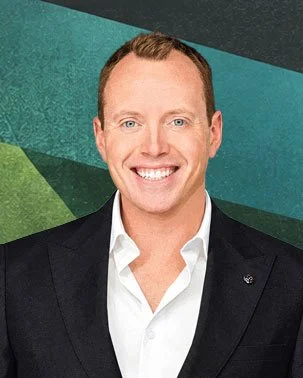
Ben McDonald, CEO of IGN
“It’s the broker’s responsibility to build the right puzzle for your business, and this is particularly true when it comes to designing commercial insurance policies for complex, high-risk industries, such as manufacturing, transportation, forestry or construction, to name a few.”
But finding a good puzzle-building broker in today’s insurance landscape is a challenge. McDonald says that when CMB Insurance Brokers started out 40 years ago, there were nearly 100 insurance carriers for brokers to work with as they pieced together comprehensive policies for their customers. Today, he says, there are fewer than 10.
That scarcity of options has made its mark on the insurance industry in some ways, but not all.
“The fundamentals of what we do as brokers haven’t changed,” says McDonald. “Being a confidant, an advisor and risk assessor is still core, but technology has changed the business – it’s more commoditized, more transactional.” In other words, it’s easier for an underwriter to reject an application based on some wildly broad statistic or algorithm that doesn’t recognize the nuances of an individual business, or reject a claim because of a dispute over some arcane piece of wording.
All of this puts more responsibility on the broker to, well, build the right puzzle and CMB has made an art out of finding those brokers then empowering them to do right by their clients.
As an independent, mid-market firm in a sea of multinational giants, it’s not always easy, but it is crucial work, says McDonald. “Most people have only one big loss in their life,” he says. They need a broker who understands the magnitude of that possibility and who can design a policy accordingly – a policy they actually understand, and one backed by a claims process that actively supports them should a loss occur. “There is a need for what we do and how we do it.”
Great policies start with great relationships
Throughout its entire 40-year history, CMB Insurance Brokers has operated on a model that centres the client. Indeed, the firm was founded in 1986 by three insurance professionals who left good jobs to make real their belief that insurance could, and should, be done better. A core tenet of this belief is that insurance is a relationship-driven business so, from the start, that meant investing in people and empowering them to succeed by ensuring their clients were well-served.
One of those early clients was Ross Sten, now president and CEO of Essex Lease Financial Corporation, which offers lease and finance solutions in the transportation industry. His story is emblematic of the importance that CMB put, and continues to put, on the value of relationships to solve problems and deliver meaningful results to business owners.
“It was 1986 when I met Mark,” says Sten, referring to McDonald’s dad, who was one of CMB’s founders. “My father and I had just started a transportation company – we had one truck at the time.” Sten says that what attracted him to Mark was his willingness to listen and work with him, rather than reach for some off-the-shelf policy for his fledgling trucking business. “He was creative, thought outside the box, came up with new solutions,” he says.
By 1996, the Stens had grown their fleet to 50 trucks, then they sold the business to a public company. For the next six years, Sten worked for that company, buying other businesses and calling on Mark and CMB for insurance needs. “The team bought 19 different companies during my time there, and Mark was always good spitballing ideas, finding solutions.”
In early 2001, at Mark’s urging, Sten re-entered the trucking business full-time as COO at H&R Transport. The company was in a tough spot, insurance-wise – many underwriters didn’t want to touch it, and the insurance they could get cost the Earth. “The H&R team and I sat with Mark and his CMB team to design a semi-self-insured program,” he says.
The plan allowed H&R to self-insure for all damage while other necessary insurance was still covered by underwriters. Sten says CMB managed any damage claims that arose, making it a seamless process at his end. By absorbing that financial risk in-house, H&R’s overall insurance premiums went down year by year. “Within 10 years we had the best insurance rates in terms of cost per mile than anyone on the highway,” says Sten. It was a creative solution designed to solve H&R’s specific and immediate problems while clearing a path toward more stable operating ground.
The relationship with CMB continued when Sten left H&R in 2015 to buy Essex. “I thought insurance and finance go hand-in-glove, so there’s an opportunity to do something together,” he says. By this time, CMB was being run by Ben McDonald and Brett Kanuka. “I was happy to see they stuck with Mark’s vision and platform.”
Through the partnership, Essex offers its customers bespoke insurance products through CMB. “We have to think outside the box, find solutions that are more meaningful for the end user and create value for them,” says Sten. And value is key.
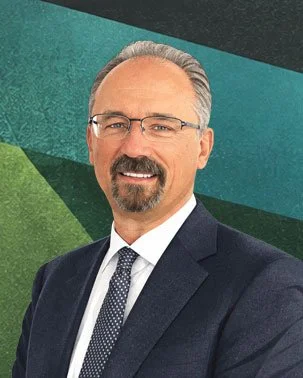
Ross Sten, CEO of Essex
“We have to think outside the box, find solutions that are more meaningful for the end user and create value for them.”
“The transportation world is in rough shape,” he says. “The only way to survive is through efficiencies, and that’s where insurance can help. You need a good broker to set up your program to be as economical as possible but still be thorough. I want to live on the side of: ‘I’ve given you the best insurance policy, and maybe it’ll cost the same as the one you have, but I’ve bolstered the things you need.’
“The value in this partnership is that CMB is there to mitigate risks and help you with safety programs, employee retention, equipment maintenance – things that the guys who are making it work are paying attention to,” he says. “With CMB, we tailor the insurance product to each business because every business is different, and that’s the CMB difference – you get a tailored policy. And on the other side, when you have an incident and have to make a claim – it’s their responsiveness; CMB does a good job of reducing the impact of that.”
As a client, Sten experienced first-hand how CMB’s relationship-first approach to insurance benefited his businesses. Today, as a partner, he’s happy to share that experience with his own clients. “That’s the reason I partnered with them,” he says. “They still go back to the grassroots of what built them, and that’s a lost art in this industry.”
Prioritizing the client
This emphasis on people and relationships is fundamental to CMB’s impressive organic growth over the last few years, and its ability to maintain independence as a mid-market broker in today’s competitive insurance landscape.
“The industry is amalgamating and smaller brokers are getting gobbled up by massive firms,” says Dan Repetowski, COO of IGN. “But we believe you get better service from the middle broker because they can spend more time with you than large corporations. We’re interested in growing CMB’s brand one policy at a time.”
And growing it is. CMB has expanded from one office in Edmonton in 2018 to 11 offices throughout Alberta, Saskatchewan and Ontario in 2026. Every one of those offices is independently and locally led, meaning decisions are based on local needs, not national priorities. Altogether, CMB manages over $10 billion in client assets and serves over 4,000 clients with a 94 per cent retention rate.
Repetowski says CMB sits in the sweet spot where it’s large enough to maintain deeply specialized practice groups, market access and credibility with carriers, while being small enough to preserve a culture of entrepreneurial leadership, local decision-making and investment, and that laser focus on prioritizing clients over shareholder profit targets.
“CMB is first and foremost about taking care of people,” says Repetowski. He believes the firm’s impressive client retention rate comes down to its strength in designing unique insurance solutions for complex industries. “We’re not generalists, we’re specialists,” he says. “We are an issues-solving organization and not afraid of problems. We ask clients what keeps them up at night and bring tools to bear on solving those problems for them. We hand-hold them through the process, work on strategies to reduce their overall risk, and if something goes wrong, we support them through a claim.”
CMB’s corporate structure is specifically designed to support this level of service. Centralized accounting and shared admin services allow individual brokers to focus on what they do best – talk to clients, find out what their needs and challenges are, and design policies specifically for them.
“We want to give our brokers more time to focus on the customer,” says Repetowski. “We want to maximize their time with a client, not hide behind emails. And it’s an ongoing process, not a once-a-year touchpoint.” That human connection, he says, is the hardest thing for multinational firms to replicate.
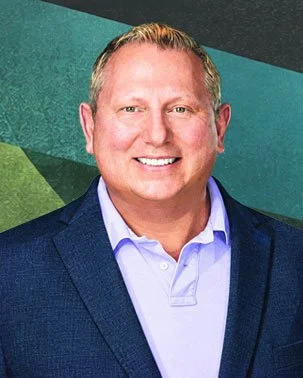
Dan Repetowski, COO of IGN
“We’re not generalists, we’re specialists. We are an issues-solving organization and not afraid of problems. We ask clients what keeps them up at night and bring tools to bear on solving those problems for them. We hand-hold them through the process, work on strategies to reduce their overall risk, and if something goes wrong, we support them through a claim.”
The human behind the claim
Repetowski, McDonald and Sten all reference CMB’s claims process. “We’re only as good as the paper we sell,” says Repetowski. “Our claims service is one of the best in the country.”
“Our superpower is to reduce the negative impact of a loss,” says McDonald. “I have higher expectations as to how claims should be done, and I expect our carriers to participate. For every dollar of a claim, the actual loss to the insured is three to four dollars in downtime. Our job is to minimize that.”
Says Sten: “Having someone advocate for you in getting your claim paid quicker – that’s one of the things CMB is great at.”
The person leading that advocacy work is Tammy Forsberg, CMB’s claims manager. She and her small team (two senior advocates and one customer service representative) are a vital link between the insured, the insurer, claims adjusters – basically everyone who has an interest in a claim. “We help to balance competing priorities while ensuring clients get fair and timely claim outcomes,” she says.
“I’ve been in this business for 40 years,” says Forsberg, adding that she and her two advocate colleagues all once worked on “the other side” as adjusters. That experience helps them understand what goes into a claim denial and how things can sometimes go awry. “We review each claim and ask, ‘did the adjuster make the right decision?’” Answering that question involves making sure everyone concerned understands and is working with the same set of facts about a loss and the coverage contained in a policy when making a decision.
The word “advocate” is key and differentiates what Forsberg and her team do from the claims departments of other insurance companies where coordinators steer the claims process but don’t always have decision-making power. “We work closely with adjusters to make sure they have the information they need to investigate and resolve claims as efficiently as possible,” she says, adding that the sooner her team can initiate that discussion, the quicker and smoother the claims process is for the insured. “Our knowledge and experience allow us to recognize potential issues before they escalate, and we’re always prepared to help keep a claim on track and moving toward a fair and timely solution.”
And it’s not always about straight-up claim denials. “The thing we see the most is write-offs,” says Forsberg. “Say a tractor worth $160,000 is not repairable and the insurance company offers $95,000. That’s when we get involved.” If, for example, the owner had made some major repairs or added a new hitch between the time the tractor was insured and when it was damaged, there might be a case for a higher valuation. “Our team carefully reviews actual cash value assessments to make sure they accurately reflect the equipment, condition and relevant investments an insured has made,” she says. “By asking the right questions and providing supporting documentation, we can help ensure settlements accurately reflect the value of the loss.”
Salvage retention is another key area for CMB’s claims team. Forsberg says many of CMB’s transportation clients want to retain their salvage following a loss, but it can be a more complex process than they think, and her team will help them navigate it. “Where appropriate, we’ll work with insurers to make sure salvage valuations are fair and reasonable,” she says.
But when a major claim denial does come through and her team thinks it warrants further attention, they will work hard to have the decision overturned or mitigated. “We have strong relationships with claims managers and insurers,” says Forsberg. “That allows us to have productive conversations with them as we advocate for our clients’ interests and explore opportunities for reconsideration. They know when we call, we’re not going to advocate if the case doesn’t deserve it.”
In all three areas – write-offs, salvage and claim denials – CMB is achieving wins for its clients, and that is deeply satisfying for Forsberg because what she thinks about most is the person who’s suffered the loss. “Claims can be overwhelming, complex and emotionally challenging for people who might be navigating the process for the first time,” she says. If they can’t operate their business properly – or at all, if they can’t sleep at night thinking about it, that is an almost personal matter for her and her team.
“There’s nothing good about a claim and I think adjusters sometimes lose sight of the human element behind it,” says Forsberg. “Every claim is a big deal. This is an event for them and we want to help. You have to put that human first in every case, this is not fluff.
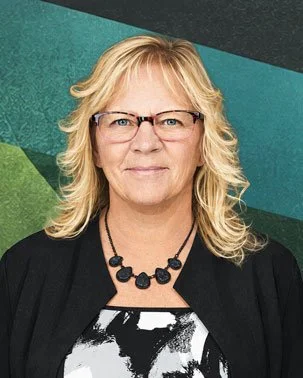
Tammy Forsberg, Claims Manager at CMB
“We have strong relationships with claims managers and insurers. That allows us to have productive conversations with them as we advocate for our clients’ interests and explore opportunities for reconsideration. They know when we call, we’re not going to advocate if the case doesn’t deserve it.”
Being better, doing better
When CMB was born in 1986, the guiding principle of its three founders was that insurance could be done better. Today, that principle has been formalized into what CMB calls its “three uniques” of client service. They are: reduce the negative impacts of a loss after it occurs, provide creative protection and cost solutions, and deliver proactive, in-person client care.
“The three uniques define ‘being better,’” says McDonald. Better policy design, better claims advocacy and better relationship-building. “We will show up, human-to-human. We’ll clarify anything you don’t understand, make you feel comfortable asking questions. We’ll guide you through the purchasing process and the claims process if necessary. We’ll check in.” This is a deeply human business, and McDonald says everyone at CMB never loses sight of that.
As a former client, now partner, Ross Sten says CMB walks the talk. “Getting multiple perspectives costs you nothing,” he says. “Go to the big guys then come and talk to someone at CMB and listen to how they’ve dealt with a problem. That’s the difference. You’re not handed off, you’re not just a number, the relationship matters.”